
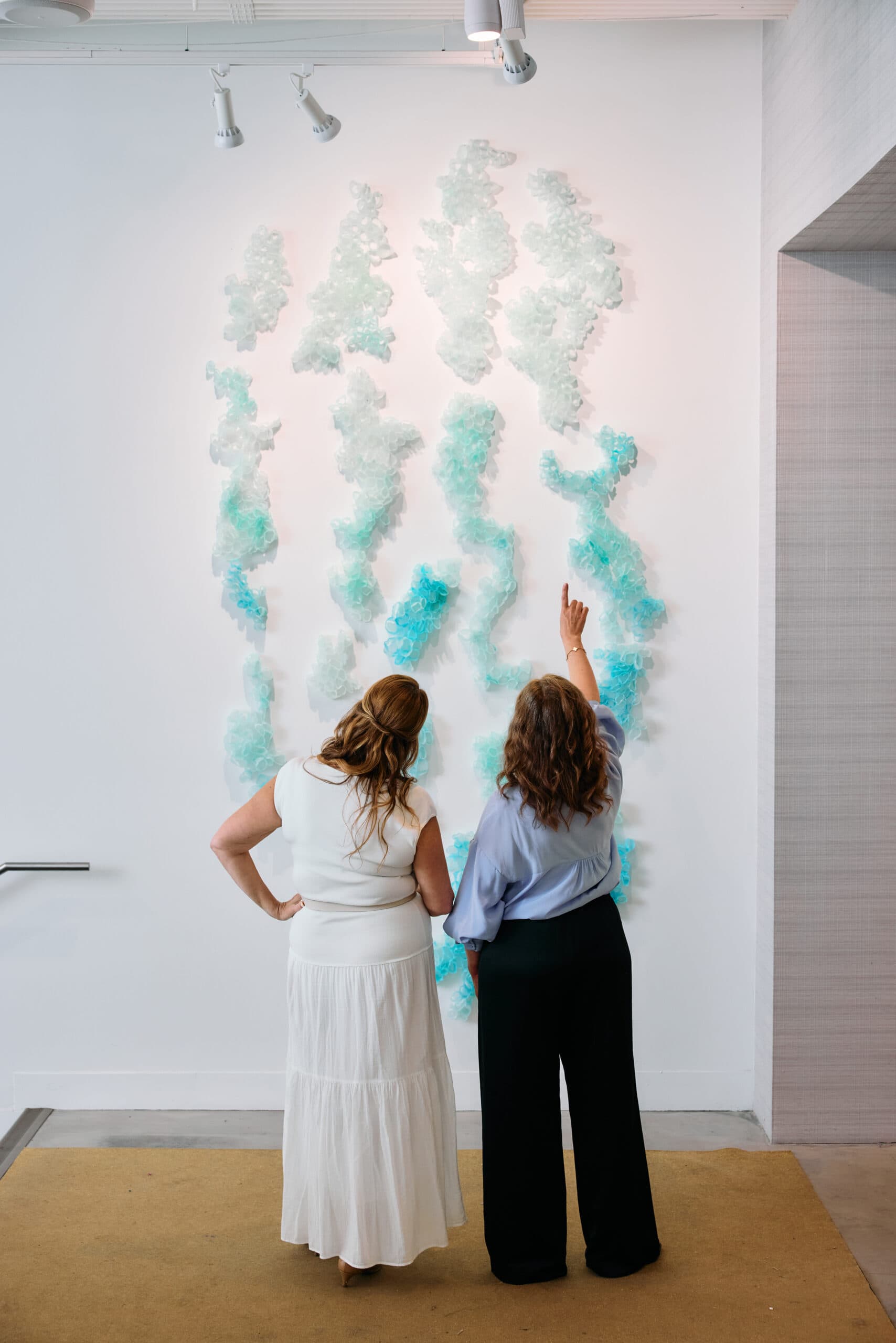
When we first saw Lisa Moriarty’s artwork, we were in awe. The more we learned about her as an artist and how she crafts her pieces, the more we fell in love with her artwork. As an encaustic artist, she adds a unique point of view to our gallery and the homes of our collectors who love her artwork as much as we do.
Each piece is deeply layered due to the history, creative process and Lisa’s inspiration.
The history of encaustic art
The encaustic method involves painting with beeswax combined with damar resin and natural pigment, applied in layers to a rigid panel and fused with heat. While it is a new medium to many of our collectors, this art form is one of the oldest in the world.
One of the most famous examples of encaustic art from history is Egyptian funerary portraits from the region of Fayum, painted during Roman rule between 100 and 300 A.D. If you ever see these paintings on display, you’ll be amazed at how they have maintained their vibrancy and definition over time.
Encaustic is like sealing a memory from the fading of time. When talking about her collection “Breathing Space” Lisa Moriarty highlights the importance of memory. It’s where she finds her inspiration, such as walks along the beach with her grandma, and it’s a mirror of her creative process. Throughout our lives, memories layer on top of each other, forming new impressions. Layering is central to encaustic artwork.
The creative process of encaustic wax
Encaustic painting isn’t a quick process. The wax has to be mixed with resin and pigments and kept warm to be usable in artwork. It’s placed down in translucent layers that need to be built to form clear color, shapes and patterns. A torch can be used to move the pigment around and create intricate details. Each stage takes time and care. It’s a ritual, not a rush, as Lisa explains in her own words.
“My studio practice is repetitive, gradual, and quiet, and that repetition is essential to how the work develops. I work with both silk organza and paper, often incorporating wax and pigment, building many individual components slowly by hand before assembling them into larger compositions. Much of the process happens through repeated gestures that create rhythm and structure over time.
“Although each piece begins through the same basic method, the fact that it is entirely handmade over long periods means variation naturally occurs. Small differences accumulate, and eventually patterns begin to appear, sometimes intentional, sometimes unexpected. That slow repetition becomes part of the visual language of the work itself.”
From its formation, encaustic art is an invitation to slow down. This theme is at the heart of Lisa Moriarty’s artwork. “Breathing Space” is an invitation to pause, exhale and just be. The art is a soft place to land and rest for a while.
The inspiration behind Lisa Moriarty’s encaustic wax
Lisa Moriarty uses this ancient medium and unhurried creative process to craft artwork inspired by the ocean, coastline and human stories told through the natural world.
In some pieces, she stays classic in form. “Resides in a Tidepool” and “To the Surface” are encaustic on wood panel.
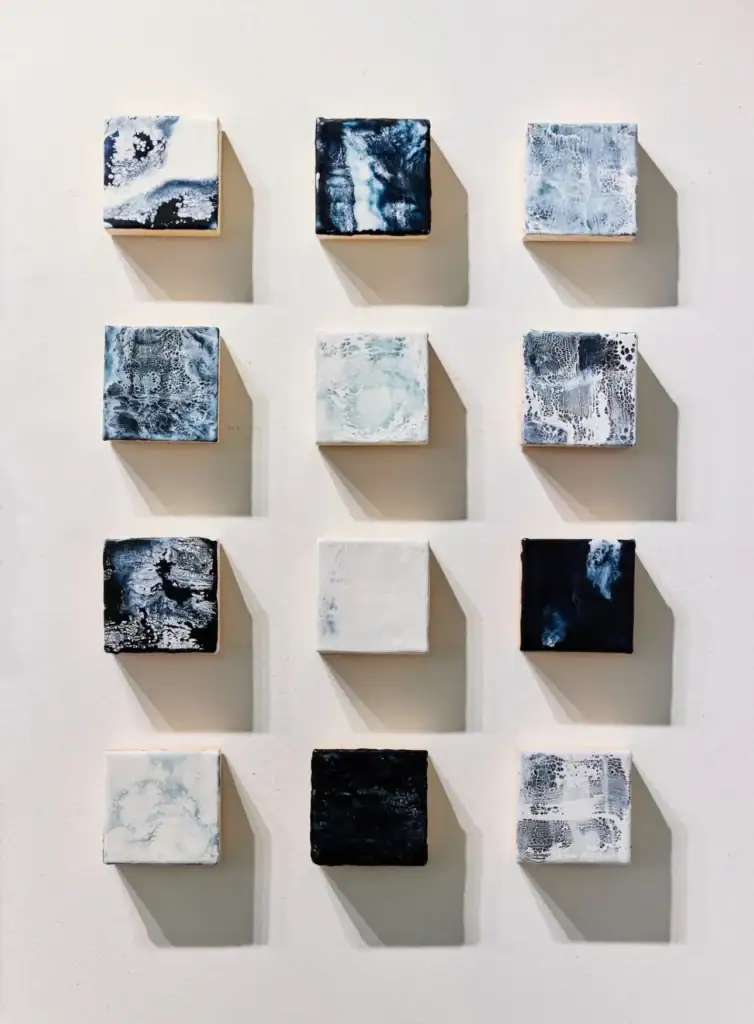
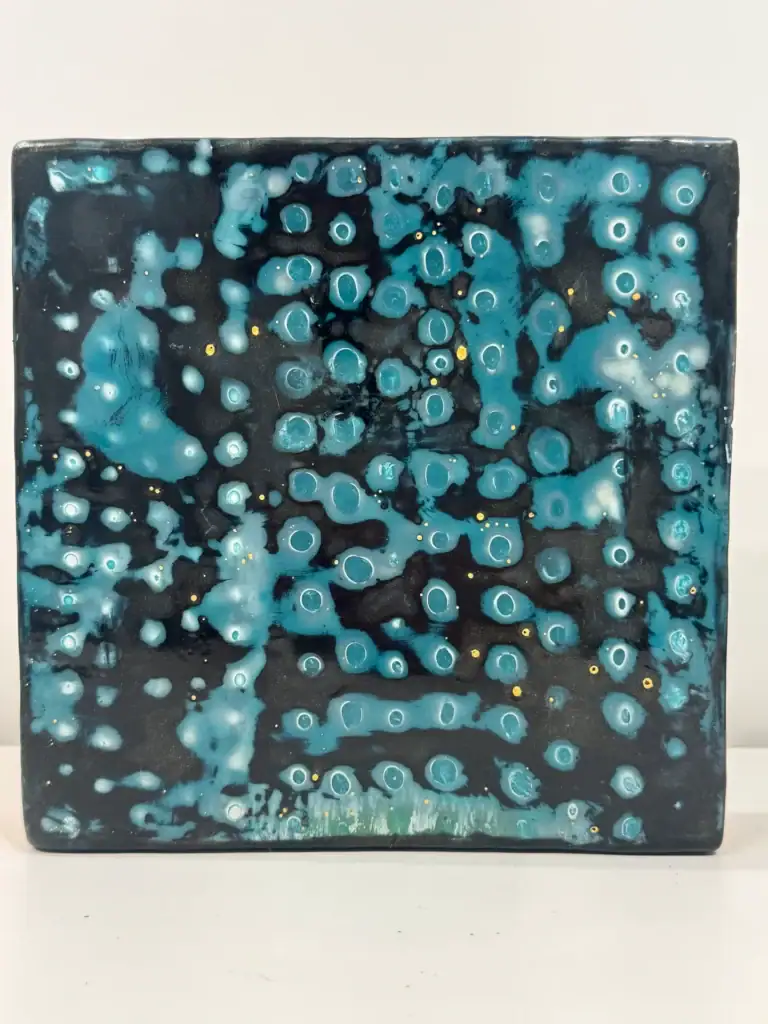
In others, she diverges. “Resides in a Tidepool: Circle” takes a new shape.
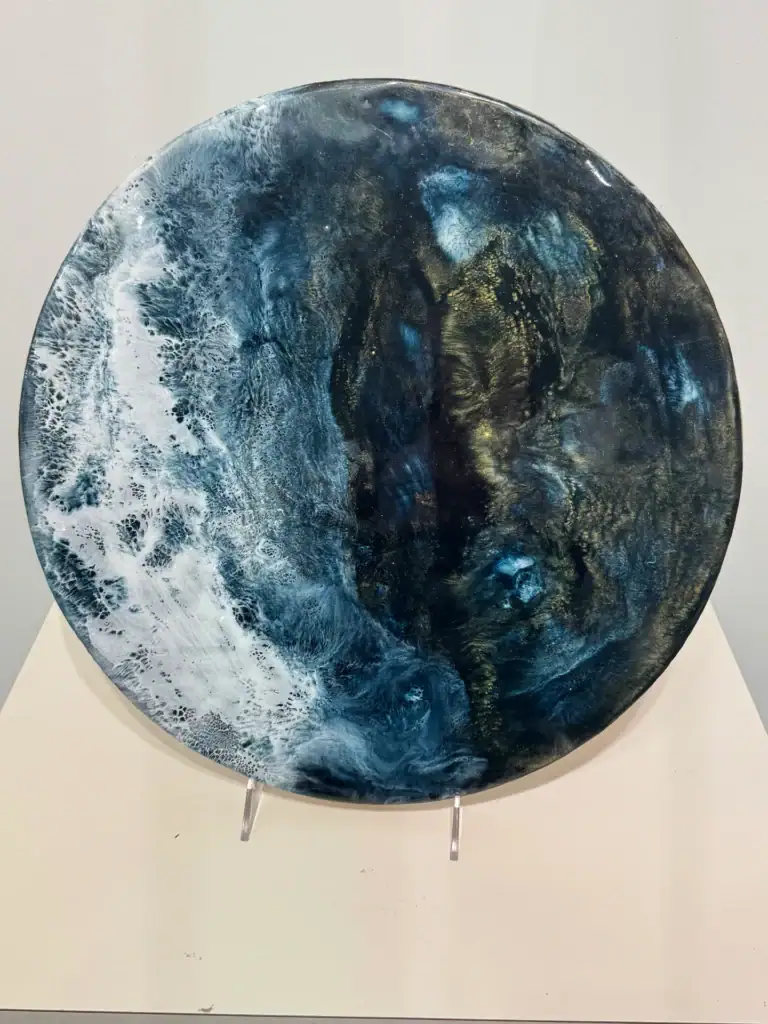
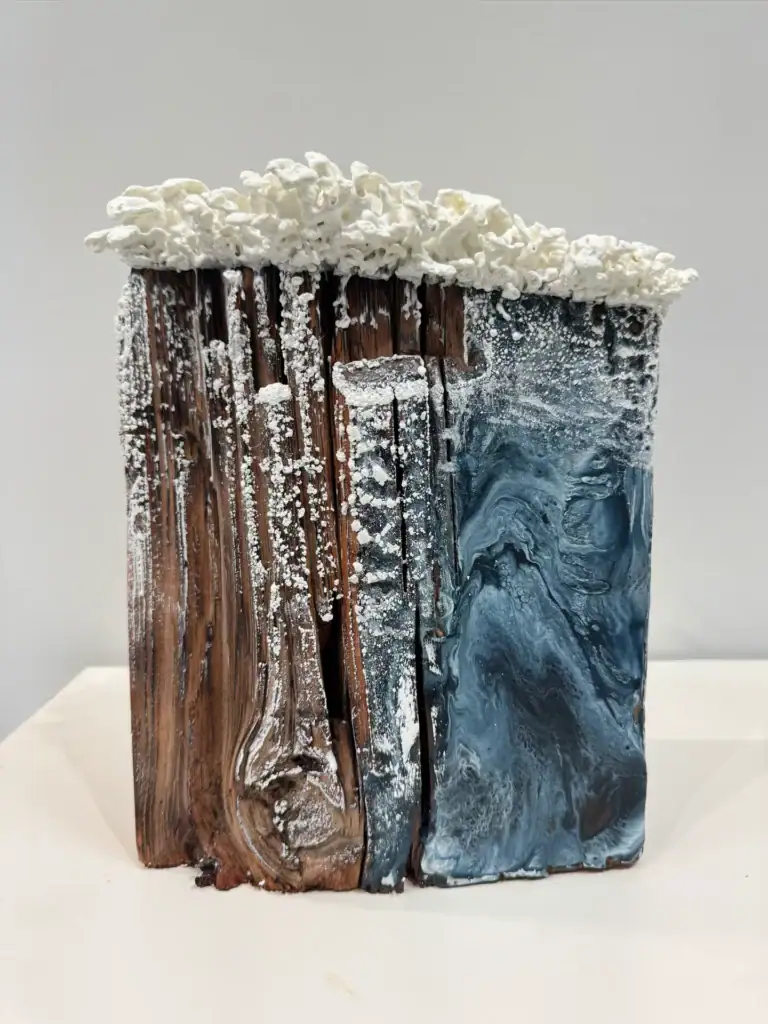
“Drift Across the Orchard” uses raw, salvaged wood instead of panels.
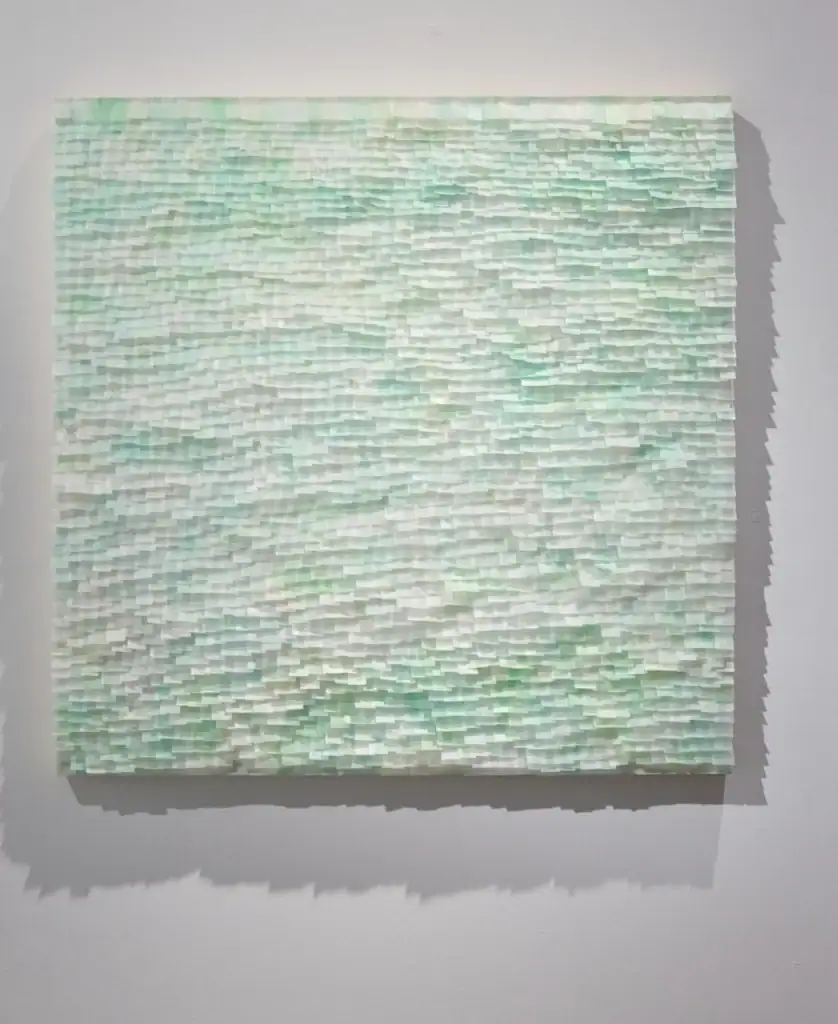
Painting paper, silk and fabric with encaustic has enabled Lisa to explore even further. “Drifted Glass” uses small painted pieces of paper layered on a wood panel to expand into new textures.
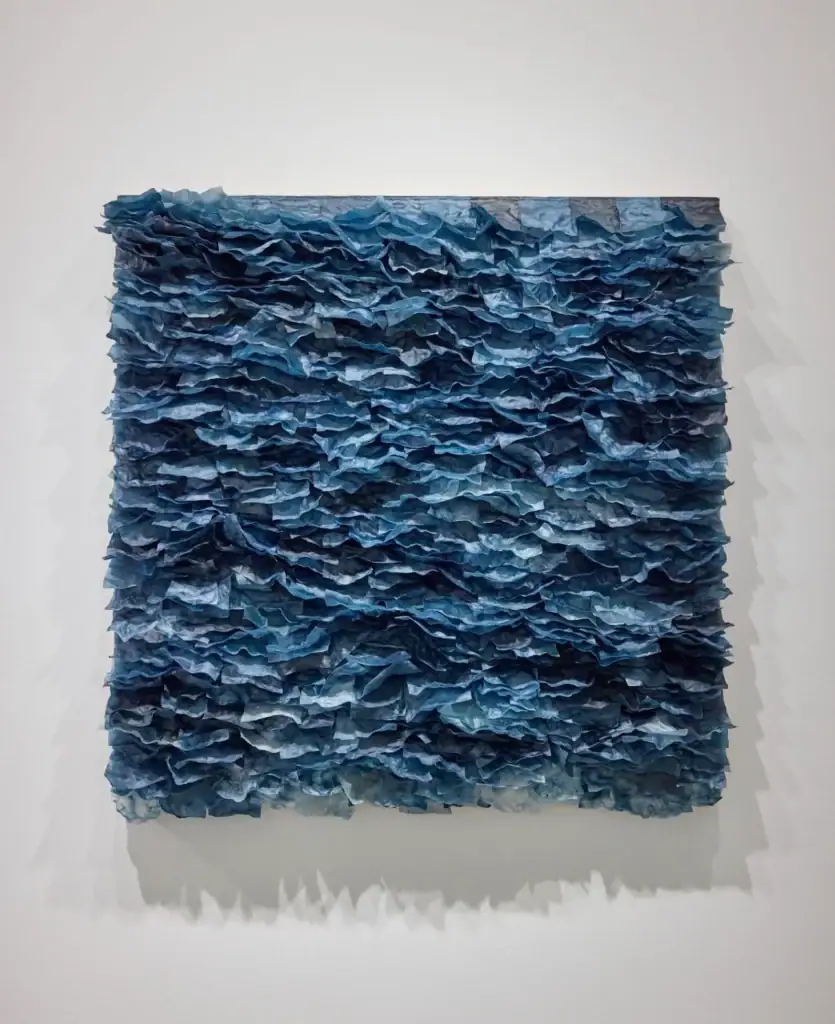
The way the fabric is assembled in “Deep Water” adds a new dimension.
The use of an unmounted canvas in “Coastal Veil” gives it a completely different flow.
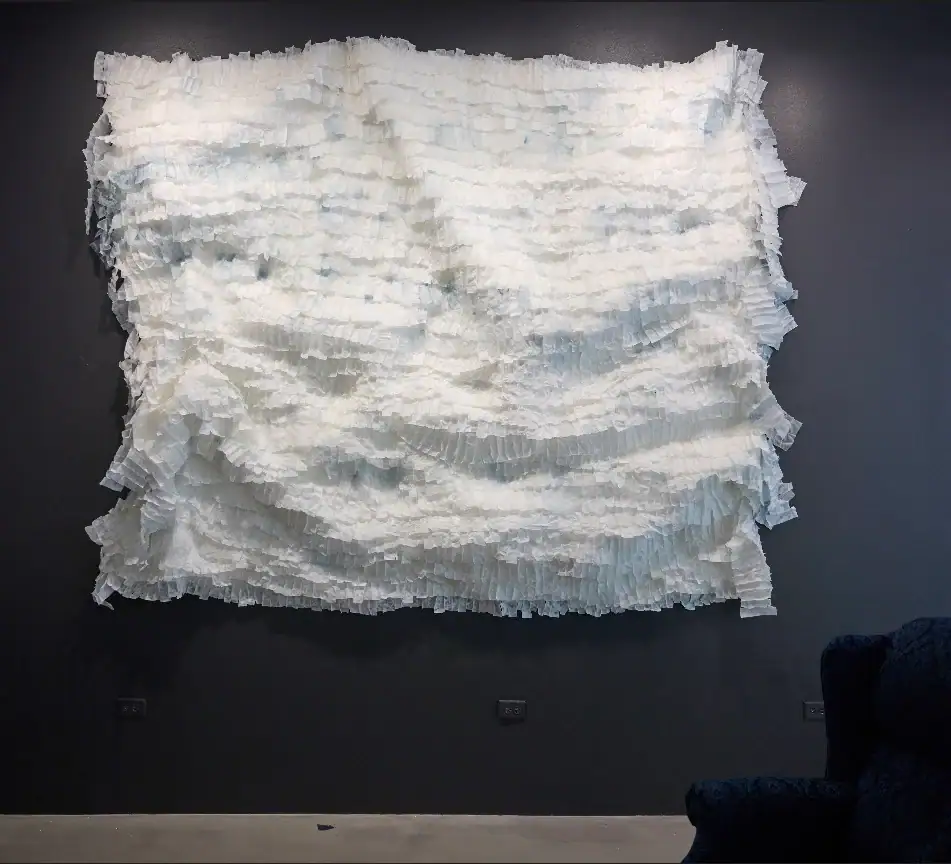
“Currents of Light” is a deconstructed installation.
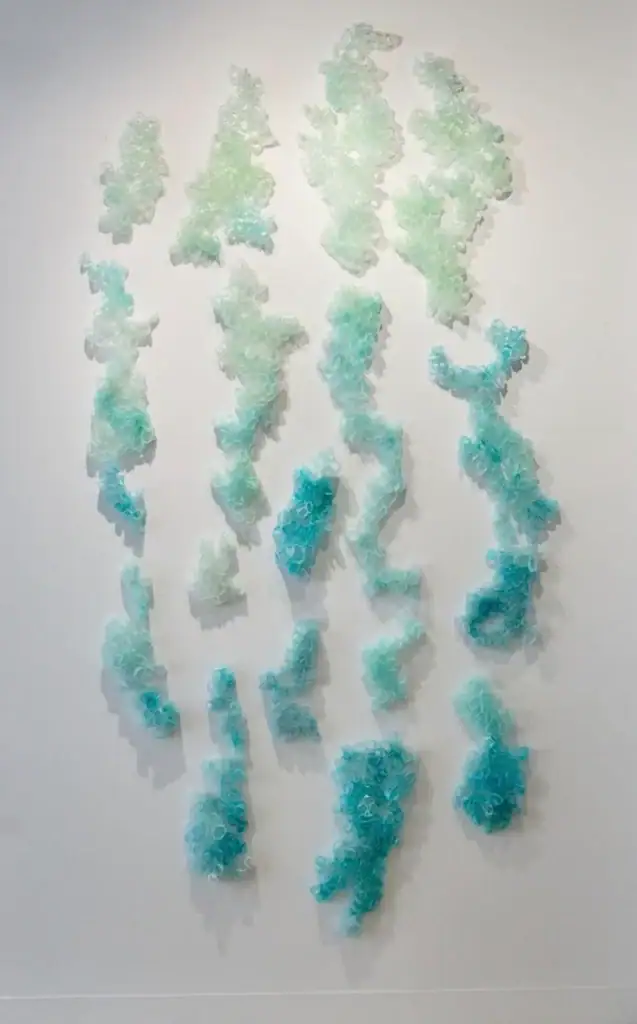
Due to the way the light moves through these pieces, they are best experienced in person. If you have never seen encaustic art before, this is your opportunity to enjoy the beautiful medium. “Breathing Space,” the solo art show by Lisa Moriarty, is open at ALG Fine Art until June 27th. Visit to get closer to encaustic artwork and add a piece to your collection.

